

Tomoyuki Koyama
Introduction
As an island nation, Japan has historically been defined by the oceans which surround it. Among other things, the ocean is a very important source of marine products which for centuries have nourished the Japanese people. Harvested from the oceans around the country are many kinds of seaweed, which have been used as flavoring materials, food additives and foodstuffs in Japanese meals. Seaweed-eating in particular is one of the unique food traditions of the country, which sports a variety of seaweeds along its long coastline. Beyond their traditional nutritional uses, seaweeds have recently gathered worldwide attention as health foods due to the many beneficial ingredients they contain in addition to being low in calories.
Nutrition gained from our daily meals builds our bodies and maintain a healthy physique. Marine algae in particular are good for this, as it is known to be a rich source of nutrients, especially minerals (Mišurcová, 2011) and fiber. Minerals are the important nutritional elements necessary for homeostasis, enzyme reaction, and tissue formation in our body. Some examples include the ferritine, which improves hypoferric anemia; iodine, which regulates the production of growth hormones; and both calcium and magnesium, which stimulates bone formation. Seaweed also contains rich and varied types of fibers, such as agarose, alignate, fucose, fucoidan, carrageenan, porpyran, and rhamnan. These specific nutrients and associated beneficial effects vary by the taxonomic group of algae however (Kim, 2011).
It has been reported that some water-soluble fibers lower cholesterol levels while others lower triglyceride levels in the serum of rats. Algal polysaccharides on the other hand have also been reported to show anti-tumor activity (Noda, 1989), and preventive activity of ateroscrelosis (Amano, 2005). However, marine algae supplies not only minerals and dietary fibers, but also produce other natural substances which have been shown to be effective at preventing lifestyle-related diseases. Research has revealed that seaweed possesses the ability to prevent such conditions as obesity, diabetes, inflammatory diseases, and osteoporosis, with each of these phenomena being described below. In this report, some recent progress in academic research about the health effects of marine algae will be introduced.
1. Anti-obesity effects
Obesity is an abnormal condition involving the accumulation of excessive triglyceride (TG) in adipose tissue. Recent studies show adipocytes in obesity patient release many cytokines to promote inflammation and to deteriorate metabolism of nutrient elements in the body. Furthermore, the metabolic syndrome leads to the development of atherosclerotic diseases, the mortality from which is very high, when the symptoms worsen (Matsuzawa, 2006). Therefore, it is important to prevent or slow the onset of obesity. In the market of functional foods to prevent obesity, there are mainly two groups of products. The first group suppresses the absorption of TG as an energy source in food, in the small intestine. The second group suppresses the accumulation of TG or accelerates the consumption of TG in the adipocyte. The ingredients possesing such effects have been found in many type of seaweeds described as below.
Cyanobacteria Leptolyngbya sp.
Marine cyanobacteria are known as important creators of various bioactive compounds with pharmacological and toxicological activities (Nagarajan, 2012). The marine γ-pyrones yoshinone A (Fig.1-1), as a major active compound was found in the extract of marine cyanobacteria Leptolyngbya sp. (Fig.1-2), which was collected from Ishigaki and Okinawa islands, Japan (Inuzuka, 2014). Yoshinone A showed inhibitory activity against the cultivated murine (3T3-L1 cells) at the concentration higher than 100 µg/mL without cytotoxicity. The marine γ-pyrone are expected to be candidates for novel lead compounds for the treatment of obesity and related diseases (Kahn, 2006). Studies on useful tools that regulate adipocytes will contribute to the prevention and treatment of these diseases.
The reducing effects of yoshinone A on accumulated TG in the mature 3T3-L1 adipocyte were investigated. In Figure 1-3, typical images of acipocyte stained TG with oil red O were shown. These results revealed that the yoshinone A type γ-pyrones showed TG reduction activities in mature 3T3-L1 adipocyte.
The anti-obesity effects of yoshinone A related compound, kalkipyrone, in vivo were examined by feeding mice a high-fat diet for six weeks. Male ddY mice (5 weeks old) were fed a normal diet (ND), a high-fat diet (HFD), and HFD with oral ingestion of kalkipyrone at a dosage of 5 mg/kg/day (HFD+KAL) during the experiment. The body weights of mice in the ND and HFD groups showed significant differences, with the values of 39.5±0.2 and 43.4±0.7 g, respectively. The HFD+KAL group (40.6±2.8 g) exhibited pronounced suppressed body weight gain, but no significant differences, due to the limited sample size for the experiment. Meanwhile, the weight of adipose tissue was significantly suppressed (p<0.05) with the kalkipyrone treatment: 0.93±0.23 g in the HFD+KAL group vs 1.62±0.15 g in the HFD group. These results suggest that oral ingestion of the γ-pyrone is effective for suppressing adipose tissue weight gain in mice. Based on these preliminary results, it was suggested that the yoshinone A type γ-pyrone expresses an anti-obesity effect in vivo with oral administration, and the enhancement of lactate production will be a key phenomenon in the reduction of accumulated TG in adipocytes (Koyama, 2016). Lactate is major end product of glucose metabolism by the glycolytic system in cytosol, but, as usual, the citric acid cycle in the mitochondria suppresses lactate production through the consumption of glucose metabolites to produce energy. Detailed mechanisms of anti-obesity activity of the marine γ-pyrone will be elucidated by continued research in mice.
Undaria pinnatifida
Fucoxanthin (Fig. 1-4), a characteristic carotenoid of brown algae, has a unique structure that includes an unusual allenic bond and 5,6-monoepoxide. Undaria pinnatifida, “Wakame” in Japanese, an edible seaweed, is rich in fucoxanthin. The fucoxanthin has an antiobesity effect by modifying uncoupling protein 1 (UCP1) expression in white adipose tissue (WAT) in KKAy mice, an animal model of type 2 diabetes with obesity. When fucoxanthin is orally administered to mice, it is metabolized to fucoxanthinol (Sugawara, 2002). Fucoxanthin and its metabolite have been shown to reduce the expression of peroxisome proliferator-activated receptor (PPAR) γ in 3T3-L1 preadipocytes, which in turn inhibits differentiation to mature adipocytes (Maeda, 2006), suggesting that fucoxanthin inhibits adipocyte maturation and stimulates UCP1 expression in WAT. In addition, fucoxanthin-rich wakame lipids (WLs) have been shown antiobesity and antidiabetic effects on HFD-induced obesity in mice (Maeda, 2009). The increased expression of monocyte chemoattractant protein-1 (MCP-1) mRNA in HF mice was normalized by ingestion of WL with a HFD. Moreover, the HF-WL diet may ameliorate alterations in lipid metabolism and insulin resistance induced by a HFD by promoting.
Saccharina japonica (Laminaria japonica)
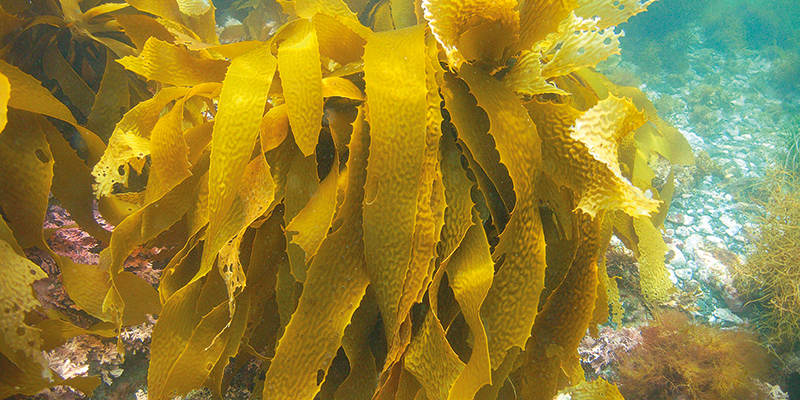
This brown algae Saccharina japonica, “Kombu”, is one of the most popular foodstuffs in Japanese meals. After being harvested from the sea and dried with sun, it is made into a kind of preserved food. To cook it, it is first soaked in waterand then various seasonings are added, making it an enjoyable food. The suppressive effects of Kombu on postplandial elevation of serum TG and glucose have been reported (Shirosaki, 2011), and these effects may also affects by processing methods of the products.
The anti-obesity effects of non-shaved Kombu (NSK) and Tororo-kombu (TK) have been investigated in animal models. ‘Tororo-kombu’ is a Japanese traditional food made from edible seaweed Laminaria sp. The way to make the dish is characterized by shaving seaweed very thinly. As a result, it was found that both of Kombu suppressed serum TG level induced by corn oil administration in rats and suppressed body weight gain in obese mice induced by a high-fat diet(Miyata, 2009). And these effects of TK were more powerful than those of NSK. Then, the inhibitory activities of TK against lipase were greater than those of NSK (Fig. 1-5). A lipase inhibitor should avoid TG absorption and show an anti-obesity effect in vivo. The thickness of a slice of TK products is around 0.02 mm, which is thinner than the typical cell size of Kombu (around 0.05 mm) (Fig. 1-6). The shaving process of TK product will be contributing to release components from cells. Consequently, Tororo-kombu is expected to prevent the obesity induced by a high-fat diet.
2. Anti-diabetic effects
Diabetes is a lifestyle-related metabolic disorder accompanying a decrease or depletion of insulin secretion. Insulin is hormone which is created exclusively to suppress elevated blood glucose level by promoting glucose uptake from blood stream into cells of the body. Continuing hyperglycemia, the common characteristic of diabetes, can lead to various complications, including diabetic retinopathy, nephropathy, and neuropathy. Therefore, diabetes not only impairs the quality of life, but also poses a threat to life. The stabilization of blood glucose is important for diabetic patients, since this prevents hyperglycemia and the complications associated with diabetes (Heacock, 2005). Medications are useful for preventing or treating diabetes and are known to reduce postprandial hyperglycemia primarily by inhibiting carbohydrate-digestive enzymes and/or delaying glucose absorption in the small intestine, thereby controlling the blood glucose level. To prevent diabetes and for precritical control of the blood glucose level, materials that show anti-hyperglycemic activity have recently been screened and developed from natural sources including marine algae (Shirosaki, 2012).
Monostroma nitidum
Several kinds of algae have been used as “Tukudani”, a Japanese traditional preserved food stewed in soy sauce, or as a dried condiment for food in Japan. The green algae Monostroma nitidum (Fig. 2-1), commonly found in shallow waters, is known as one of the main ingredients for these foods. Inhibitory effects of the green algae on postprandial glycemic response have been invested in experimental models in rats. A powder of M. nitidum (0.2 g/kg body weight) ingested with carbohydrate solution showed suppressive effects on the postprandial elevation of blood glucose levels in rats. In further experiments using extracts prepared from the powder, the water-soluble part showed the suppressive activity. Then, the similar results were given in a human trial using the powder of M. nitidum on healthy volunteers (Kamimura, 2010).
Therefore, M. nitidum appears to be a good candidate to prevent diabetes in human and animals. The mechanism is not yet clear enough but the results strongly indicate that rhamnan sulfate contributes to the suppressive effect of the glucose response.
Pyropia sp. (Porphyra sp.)
In Japan, a special kind of red algae “Nori” had long been consumed as a common foodstuff, frequently sound in foods as common as sushi rolls and rice ball. Today, almost all Nori algae are supplied and cultivated using traditional techniques, and biologically major species are Pyropia yezoensis and Pyropia tenera. Some species in the genus Porphyra were taxonomically changed into new genus Pyropia in 2011. Recently, some have reported that Nori shows anti-diabetic effects in experiments using animal models and human volunteers as below.
The 75% ethanol extracted fraction of P. yezoensis showed a suppressive effect against lipolysis in cultivated adipocyte. The effect can be seen as an indicator of insulin-like activity. The active component was estimated to be below 1,000 of molecular weight based on an ultrafiltration technique. The components showed suppressive effects on the postprandial elevation of blood glucose level in glucose-ingested rat. The researchers concluded that the Nori alga contains insulin-like components, which is acceptable even by oral application (Tomoyori, 2009).
The effects of Nori (3 g) on the postprandial glycemic response to white bread were studied in twelve healthy volunteers females aged 22.08 ± 1.44 years. In the glycemic index (GI) of white bread + Nori intake group decreased to 68% against GI of white bread alone group. And in vitro experiments showed inhibitory effect on starch hydlysis in Nori extract. Thease results revealed that Nori will be applicable as food material to control GI of the other foods (Goñi, 2000).
3. Anti-inflammatory effects
Inflammation is one of the most important biological defense reaction systems our bodies use to maintain and regulate homeostasis. However, when locally excessive inflammation reaction occurs, it may become a trigger of diseases, causing damage to the body’s own tissue. In normal conditions, the systems are controlled, but a degradation of health and the attendant disruption of proper nutrients can aggravate inflammation. Some seaweed has a regulatory function for the inflammatory response, while other seaweed has also been found to contain components which can prevent or mitigate inflammatory diseases, such as auto inflammatory disorders, pollen allergies, and ulcerative colites.
Dictyopteris undulata
During screening research for functional foods, zonarol (Fig. 3-1), a marine hydroquinone sesquiterpene, was isolated from the brown algae Dictyopteris undulata (Fig. 3-2) as an anti-inflammatory compound to suppress edema in mice. To elucidate the in vivo functions of zonarol, the pharmacological effects of zonarol administration on dextran sulfate sodium (DSS)-induced inflammation in a mouse model of ulcerative colitis (UC) were investigated (Yamada, 2014). The UC is recognized as an incurable disease requiring an extended period of treatment by the Health, Labor and Welfare Ministry in Japan.
In the model, male ICR mice received with 2% DSS in drinking water for 14 days. At the same time, 5-aminosalicylic acid (5-ASA) at a dose of 50 mg/kg (positive control) and zonarol at doses of 10 and 20 mg/kg, were given orally once a day. DSS-treated animals developed symptoms similar to those of human UC, such as severe bloody diarrhea, which were evaluated by the disease activity index (DAI). Treatment with 20 mg/kg of zonarol, as well as 5-ASA, significantly suppressed the DAI score, and also led to an impluvement colon length (Fig. 3-3). Zonarol treatment significantly reduced the expression of proinflammatory signaling molecules, and prevented the apoptosis of intestinal epithelial cells.
The marine hydroquinone isolated from D. undulata against experimental UC via the inhibition of both inflammation and apoptosis, very similar to the standard-of-care sulfasalazine, a well-known prodrug that releases 5-ASA. The oral administration of zonarol might offer a better treatment for human IBDs than 5-ASA, or may be useful as an alternative/additive therapeutic strategy against UC, without any evidence of side effects.
Eisenia arborea
The brown algae Eisenia arborea called “Sagarame” in Japanese is found in the central regions along the Pacific coast of mainland of Japan (Fig. 3-4). In morphology, it is similar to Eisenia bicycleis, called “Arame” in Japanese, which is found widely through all of Japan. In the screening experiments using cultivated cells, the extract of E. arborea prominently suppressed histamine release (Sugiura, 2006).
In the feeding experiment in immunoglobulin E (IgE) sensitive allergy model rats, the levels of IgE and histamine in serum were suppressed in the rats fed a diet supplemented with dried E. arborea powder for 42 days. The 6 of active compounds were identified as phlorotannins, which are polyphenols commonly found in brown algae, following purification procedure guided by histamine release inhibitory activity in vitro. One of them is the new phlorotannin, phlorofucofuroeckol-B (Fig. 3-5). The mechanism of anti-allergic effects was estimated to be an inhibitory effect on histamine release and a regulative effect on lymphocytes balance by analysis of effects on cytokines and immunoglobulins (Sugiura, 2008).
Therefore, this alga seems to be useful as a foodstuff to relieve allergic symptoms such as atopic dermatitis, pollenosis, asthma and allergic rhinitis. The valuable alga has been applied as functional food to relieve allergies to pollen.
4. Anti-osteoporosis effects
Worldwide, 200 million people are estimated to be suffering from osteoporosis based on the report from the World Health Organization (Cooper, 1999). Osteoporosis is a disabling disorder that is characterized by decreased bone strength and density. Bone metabolism is characterized by two opposing activities: bone formation and bone resorption (Martin, 2002). Bone mass depends on the balance between resorption and formation within the remodeling unit. Bone remodeling is disturbed under a variety of pathologic conditions that affect the skeleton, including postmenopausal osteoporosis and rheumatoid arthritis, in which there is a local and/or systemic alteration in the levels of hormones or proinflammatory cytokines that are known to stimulate or inhibit bone resorption in vitro and in vivo. Osteoclasts are multinucleated cells that play a crucial role in bone resorption. The imbalance between bone resorption and bone formation results in osteoporosis. Presently, osteoporosis is treated with effective medicine given from the hospital. However, nutritional factors may be especially important in the prevention of osteoporosis. Therefore, substances that can suppress osteoclast formation are potential candidate materials for drug development or functional foods. There have been reports that unique compounds or extracts from micro and macro marine algae can suppress osteoclast differentiation (Koyama, 2011).
Dianoflagellates Symbiodinium sp.
Dinoflagellates are widely known to be a rich source of biologically active and structurally unique secondary metabolites (Uemura, 2006). Some dinoflagellates are found as symbiotic zooxanthellae in a wide range of marine invertebrates. They can live in limited environmental conditions in the host animal’s body, but some dinoflagellates can be cultured under artificial conditions with a seawater medium. We can find its useful metabolites of dinoflagellates in the culture medium or together with host animals.
Symbioimine, isolated from the cultured dinoflagellate Symbiodinium sp., had suppressive effects against osteoclast differentiation in osteoclast-like cells. The symbiotic micro alga Symbiodinium sp. derived from the marine acoel flatworm (2 mm of body length), was cultured in artificial sea water. The medium with dinoflagellate was extracted with 80% aqueous EtOH to collect metabolites (Fig 4-1). Symbioimine (Fig. 4-2), an amphoteric iminium metabolite, has been isolated from the extract. Symbioimine has been shown to be an anti-resorptive and anti-inflammatory drug (Kita, 2004). Its ability to suppress osteoclast differentiation (EC50 = 44 µM) was demonstrated in RAW264 cells (Fig. 4-3).
Norzoanthamine, isolated from the colonial zoanthid Zoanthas sp., has been shown to have anti-osteoporosis activity in ovariectomized mice. The zoanthamine alkaloids are a structurally unique family of natural products that exhibit anti-osteoporotic, antibiotic, anti-inflammatory, and cytotoxic biological activities. Although they are isolated from soft coral of the order zoantharia, symbiotic dinoflagellate may play an important role in their biosynthesis. Norzoanthamine (Fig. 4-4) was isolated along with some analogs from a Zoanthus species collected off the Ayamaru coast of the Amami Islands in Japan (Fukuzawa, 1995). Further investigations will be needed to elucidate the mechanism of the anti-osteoporosis action of norzoanthamine.
Sargassum sp.
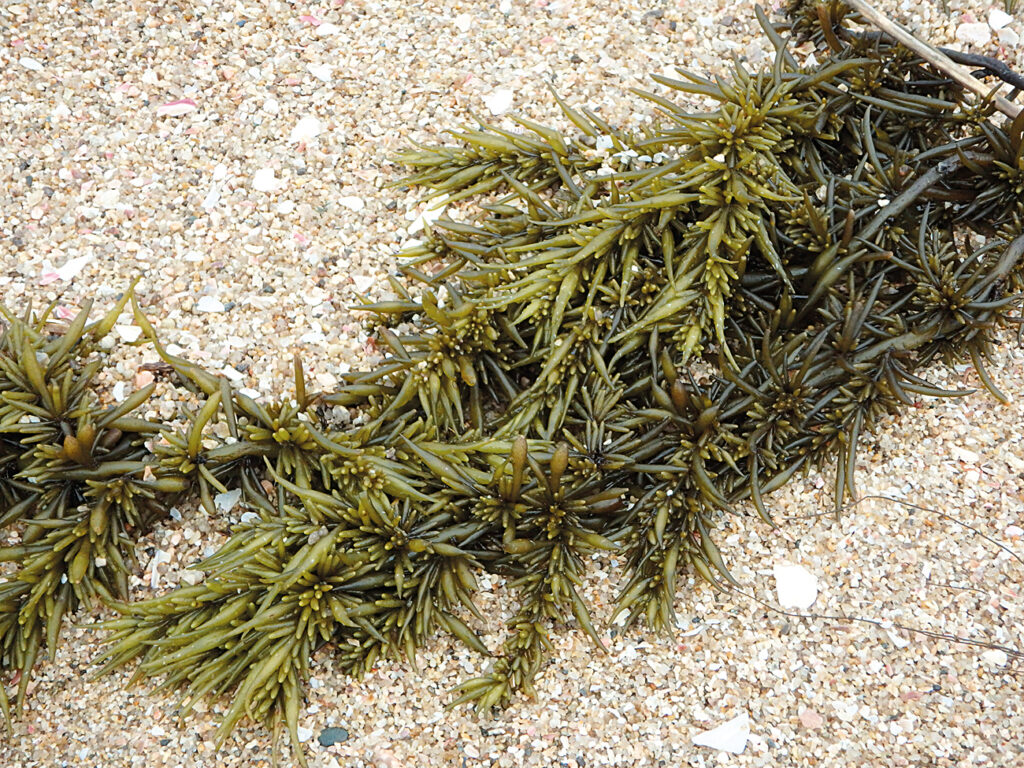
The genus Sargassum include several kinds of edible brown algae. With regard to the effects on bone metabolism, there are some reports using crude extracts of brown algae, S. horneri, “Akamoku” in Japanese, and S. fusiforme, “Hijiki” in Japanese.
The effect of the water-soluble extract from marine algae Sargassum horneri on bone metabolism has been investigated (Uchiyama, 2004). The S. horneri extract showed the activities on osteoclastic bone resorption and osteoblastic bone formation in vitro. In the animal experiments, the S. horneri extract helped to prevent bone loss in streptozotocin-induced diabetic rats in vivo. Interestingly, these two active components in S. horneri extract were thought to regulate bone metabolism to prevent osteoporosis. It is expected that the active components will be identified in the near future.
An extract of Sarugassum fusiforme (Fig. 4-5) has recently been shown to have anti-osteoporosis activity. This edible seaweed is washed well in boiled water and dried to keep long term for preservation. Methanol extract was prepared from the dried materials for the series of experiments. This extract showed suppressive effect against osteoclast differentiation and accelerative effect against osteoblast formation in the separate in vitro experiments. Then, it also showed anti-osteoporosis activity in ovariectomized mice by regulating the balance between bone resorption and bone formation. The ovariectomized treated mice quickly lost bone mass and strength within a few weeks due to insufficient estrogen production physiologically (Fig. 4-6). On the other hand, oral treatment of mice with S. fusiforme at doses of 500 mg/kg/day for four weeks led to a significantly higher retention of femur weight than in the control group. Furthermore, these preventive effects were not accompanied by an increase in uterine weight, which is an indicator of a serious side effect of treatment with 17b-estradiol in the case of hormonal treatment. The methanol extract of S. fusiforme has been suggested to regulate bone turnover by influencing both osteoblasts and osteoclasts. These two effects are thought to involve other compounds. Since these effects were associated with the methanol extract, the active components are thought to be non-polar, low-molecular-weight molecules. These marine algal extracts of Sargaassum are also candidates for functional food or traditional medicine for the prevention of bone diseases such as postmenopausal osteoporosis.
Conclusion
In Japan, seaweed is one of the most common but also most important foodstuffs in daily meals. A tremendous variety can be found in the supermarket, such as Nori, Kombu, or Wakame. The variety of these products depends on the both the ingredients and the process of preparing them. Many seaweed products undergo washing, drying, slicing, roasting, boiling, salting, and a variety of other processes. This allows consumers to enjoy different types of seaweed in every type of meal, from soups, mixed rice dishes, or cooked foods. It can even be enjoyed in seasonings, teas, and light snacks. The wide variety of usage is very important as it allows the Japanese people to not only enjoy the taste but also the health benefits. Recently, many functional foods made with seaweeds have been released on the market, stressing marine algae’s benefits as functional foods and helpful medicine.
Algae remains an abundant marine resource, and increasingly it can be produced outside of its marine environment, for example through tank incubation. In the future, more and different types of algae will increasingly be seen not only as edible, but critical for the maintenance of good health as well.
* TOKYO UNIVERSITY OF MARINE SCIENCE AND TECHNOLOGY
Laboratory of Food Chemistry and Functional Nutrition,
Graduate School of Marine Science and Technology
References
H. Amano, M. Kakinuma, D. A. Coury, H. Ohno, T. Hara
Effect of a seaweed mixture on serum lipid level and platelet aggregation in rats
Fisheries Science 71, 1160–1166, 2005.
C. Cooper
Epidemiology of osteoporosis.
Osteoporos. Int. 9, 2–8 (1999).
S. Fukuzawa, Y. Hayashi, D. Uemura, A. Nagatsu, K. Yamada, Y. Ijuin
The isolation and structures of five new alkaloids, norzoanthamine, oxyzoanthamine, norzoanthaminone, cyclozoanthamine, and epinorzoanthamine.
Heterocycl. Commun. 1, 207–214 (1995).
I. Goñi, L. Valdivieso, A. Garcia-Alonso
Nori seaweed consumption modifies glycemic response in health volunteers.
Nutrition Research, 20(10), 1367-1375 (2000).
P. M. Heacock, S. R. Hertzler, J. A. Williams, B. W. Wolf
Effects of a medical food containing an herbal alpha-glucosidase inhibitor on postprandial glycemia and insulinemia in healthy adults.
J. Am. Diet. Assoc., 105(1), 65-71 (2005).
T. Inuzuka, K. Yamamoto, A. Iwasaki, O. Ohno, K. Suenaga, Y. Kawazoe, D. Uemura
An inhibitor of the adipogenic differentiation of 3T3-L1 cells, yoshinone A, and its analogs, isolated from the marine cyanobacterium Leptolyngbya sp.
Tetrahedron Lett. 55, 6711–6714 (2014).
S. E. Kahn, R. L. Hull, K. M. Utzschneider
Mechanisms linking obesity to insulin resistance and type 2 diabetes.
Nature 444, 840–846 (2006).
Y. Kamimura, K. Hashiguchi, Y. Nagata, T. Saka, M. Yoshida, Y. Makino, H. Amano
Inhibitory eects of edible green algae on glycemic responses.
Nippon Shokuhin Kagaku Kogaku Kaishi 57(10), 441-445 (2010). (In Japanese)
S-K. Kim, Y-X. Li
Medicinal Benefits of Sulfated Polysaccharides from Sea Vegetables.
In “Marine Medicinal Foods Vol. I: Implications and Applications, Macro and Microalgae” (ed. Se-Kwon Kim), Elsevier, 391-402, 2011. ISBN: 978-0-12-387669-0
M. Kita, M. Kondo, T. Koyama, K. Yamada, T. Matsumoto, K-H. Lee, J-T. Woo, D. Uemura
Symbioimine exhibiting inhibitory effect of osteoclast differentiation, from the symbiotic marine dinoflagellate Symbiodinium sp.
J. Am. Chem. Soc. 126, 4794-4795 (2004)
T. Koyama
Extracts of Marine Algae Show Inhibitory Activity Against Osteoclast Differentiation.
In “Marine Medicinal Foods Vol. I: Implications and Applications, Macro and Microalgae” (ed. Se-Kwon Kim), Elsevier, 443-454, 2011. ISBN: 978-0-12-387669-0
T. Koyama, Y. Kawazoe, A. Iwasaki, O. Ohno, K. Suenaga, D. Uemura
Anti-obesity activities of the yoshinone A and the related marine g-pyrone compounds.
The Journal of Antibiotics. 2016 [online publication 2 March 2016; doi: 10.1038/ja.2016.19]
H. Maeda, M. Hosokawa, T. Sashima, N. Takahashi, T. Kawada, K. Miyashita
Fucoxanthin and its metabolite, fucoxanthinol, suppress adipocyte differentiation in 3T3-L1 cells.
Int. J. Mol. Med. 18, 47–52 (2006).
H. Maeda, M. Hosokawa, T. Sashima, K. Murakami-Funayama, K. Miyashita
Anti-obesity and anti-diabetic effects of fucoxanthin on diet-induced obesity conditions in a murine model.
Mol. Med. Rep. 2, 897–902 (2009).
R. B. Martin
Towards a unifying theory of bone remodeling.
Bone 26, 1–6 (2002).
Y. Matsuzawa
The metabolic syndrome and adipocytokines.
FEBS Lett. 580, 2917–2921 (2006).
L. Mišurcová, L. Machů, J. Orsavová
Seaweed Minerals as Nutraceuticals
In “Marine Medicinal Foods Vol. I: Implications and Applications, Macro and Microalgae” (ed. Se-Kwon Kim), Elsevier, 371-390, 2011. ISBN: 978-0-12-387669-0
M. Miyata, T. Koyama, T. Kamitani, T. Toda, K. Yazawa
Anti-obesity effect on rodents of the traditional Japanese food, Tororo-kombu, shaved Laminaria.
Biosci. Biotech. Biochem. 73(10), 2326-2328, 2009. [Publish: 2009.10] [doi: 10.1271/bbb.90344].
M. Nagarajan, V. Maruthanayagam, M. Sundararaman
A review of pharmacological and toxicological potentials of marine cyanobacterial metabolites.
J. Appl. Toxicol. 32, 153–185 (2012).
H. Noda, H. Amano, K. Arashima
Antitumour Activity of Polysaccharides and Lipids from Marine Algae
Nippon Suisan Gakkaishi 55(7), 1265-1271 (1989)
M. Shirosaki, T. Koyama
Laminaria japonica as a Food for the Prevention of Obesity and Diabetes.
In “Marine Medicinal Foods Vol. I: Implications and Applications, Macro and Microalgae” (ed. Se-Kwon Kim), Elsevier, 200-212, 2011. ISBN: 978-0-12-387669-0
M. Shirosaki, T. Koyama
Antidiabetic Compounds from Marine Organisms and Their Properties.
In “Marine Pharmacognosy: Trends and Applications” (ed. Se-Kwon Kim), CRC Press, 7-20, 2012. ISBN: 978-1-43-989229-9.
T. Sugawara, V. Baskaran, W. Tsuzuki, A. Nagao
Brown algae fucoxanthin is hydrolyzed to fucoxanthinol during absorption by Caco-2 human intestinal cells and mice.
J. Nutr. 132, 946–951 (2002).
Y. Sugiura, K. Matsuda, Y. Yamada, M. Nishikawa, K. Shioya, H. Katsuzaki, K. Imai, H. Amano
Isolation of a New Anti-Allergic Phlorotannin, Phlorofucofuroeckol-B, from an Edible Brown Alga, Eisenia arborea.
Bioscience, Biotechnology, and Biochemistry, 70 (11), 2807-2811, 2006.
Y. Sugiura, K. Matsuda, T. Okamoto, M. Kakinuma, H. Amano
Anti-allergic effects of the brown alga Eisenia arborea on Brown Norway rats.
Fisheries Science, 74 (1), 180–186, 2008.
H. Tomoyori, M. Asakawa
Insulin-like effects in rats of a constituent of seaweed.
Nippon Suisan Gakkaishi, 75(2), 261-263 (2009) (In Japanese)
S. Uchiyama, M. Hashizume, Y. Hokari, T. Nakagawa, A. Igarashi, M. Yamaguchi
Characterization of active component in marine alga Sargassum horneri extract in stimulating bone calcification in vitro.
J. Health Sci. 50, 634–639 (2004).
D. Uemura
Bioorganic studies on marine natural products—Diverse chemical structures and bioactivities.
Chem. Rec. 6, 235–248 (2006).
S. Yamada, T. Koyama, H. Noguchi, Y. Ueda, R. Kitsuyama, H. Shimizu, A. Tanimoto, K-Y. Wang, A. Nawata, T. Nakayama, Y. Sasaguri, T. Satoh.
Marine hydroquinone zonarol prevents inflammation and apoptosis in dextran sulfate sodium-induced mice ulcerative colitis.
PLOS ONE, 9 (11): e113509. [Nov 19, 2014. doi:10.1371 / journal.pone.0113509] (*: Equal contribution).
Natural 1