

* Tomoyuki Koyama
Introduction
Our daily food intake is very important actually it has the goal of obtaining enough energy and nutrition for our daily activities. Our physiological and metabolic systems are regulated to stockpile excess energy in our bodies for emergency use. However, in this age of gluttony, these systems fail to work reliably and accurately when we take in too much energy. It is well known that overweight and obesity are most often caused by excessive caloric intake, unbalanced diet, social stress, and lack of exercise. In order to maintain an optimum body condition, it is important to select the appropriate quality and quantity of food consumed in one’s daily meals. A good and smart strategy is to include the consumption of seaweed, which is a good food choice to help regulate the calories consumed at the dinner table and in our bodies. The health benefits and attractive potential of seaweed as a food resource are introduced in this article.
Weight Report
In 2017, the World Health Organization (WHO) reported that over 50% of European adults are overweight or obese. Based on the worldwide statistical data from 2014, more than 1.9 billion adults 18 years of age and older were overweight. Of these, over 600 million were obese. According to the Organization for Economic Cooperation and Development, worldwide obesity has more than doubled in the past two decades (OECD, 2017). The terms “overweight” and “obesity” are classified by the body mass index (BMI), an indicator of the body shape, or more specifically, abdominal body fat. The BMI for adults is defined as a person’s weight in kilograms divided by the square of his or her height in meters (kg/m2). The term “overweight” is used to define a BMI greater than or equal to 25, while the term “obesity” is defined as a BMI greater than or equal to 30. The international research group for obesity has raised alarms over both situations. They reported that the increasing rate of obesity in adults (both men and women) was 27.5%, and it was 47.1% in children (both boys and girls) over the few decades included in this research (Ng et al., 2014). Nowadays, one out of three children are overweight or obese, and this rate will continue to increase worldwide.
Costs of Excess
What is the problem with being overweight? Nowadays it is easy to find many different kinds of comfortably sized clothing and satisfying amounts of delicious food on the market. Therefore, we could be able to lead happy lives without the trouble and the effort to control our weights. However, being overweight actually affects the quality of one’s life from inside the body. Recent studies have revealed that excessive accumulated visceral fat may induce serious diseases, as described below.
Overweight and obesity are abnormal conditions of accumulating excessive triglycerides (TG), which are important energy sources for our body that are deposited in the adipose tissues. The adipose tissue has the ability to accumulate TG and to release many types of adipocytokines as chemical signals against other tissues. The excessive accumulation of visceral fat (abdominal adipocytes) can induce an imbalance in the secretion of cytokines, and it is known to cause metabolic syndrome (Matsuzawa, 2006). Recent studies have elucidated that adipocytes in obese patients release many cytokines that promote inflammation and deteriorate the metabolism. Moreover, metabolic syndrome contributes to the development of atherosclerotic diseases, in which the fatality is very high when the symptoms get worse (Ritchie, 2007). Therefore, to prevent the development of these diseases and live a healthy life, the accumulation of visceral fat must be avoided by all possible means.
Strategies for Fighting Obesity
Obesity is a serious global disease: for this reason there are suitable medicines (Rodgers, 2012) and/or surgical operations available for its treatment and improvement. Although these strategies are effective for decreasing the existing disease in patients, they are not effective to prevent new cases of overweight and obesity. However, the most typical and significant cause of this disease is clearly the excessive accumulation of visceral fat via excessive caloric intake. If one can control the accumulation of visceral fat with one’s lifestyle, obesity can be prevented. Certain types of food with special functional ingredients to fight overweight conditions can be found, and some of them have already reached the markets of many countries. They are divided into two main groups based on their mechanisms of action. The first group includes low calorie foods based on the governing quality; for example, low-fat, low-carbohydrate, fiber-enriched, and vitamin-enriched foods. The second group contains or is enriched with functional ingredients, such as the metabolites of plants, including fiber, polyphenols, and alkaloids. These ingredients suppress the absorption of TG from the small intestine by inhibiting lipase, which is a digestive enzyme for TG, and/or consume accumulated TG in the fat tissue by accelerating heat production in the adipocytes. Consuming one or some types of these foods can effectively suppress weight gain.
The adult obesity rates are highest (over 30%) in the United States, Mexico, New Zealand, and Hungary, while they are relatively low in Italy (9.5%), Korea (5.3%), and Japan (3.7%) (OEDC, 2017). However, many functional food products for the prevention of overweight and obesity can be found on the Japanese market. In general, people (including the Japanese) have a great interest in the prevention of overweight and obesity by making the best use of food materials and supplements in the daily diet.
Seaweed, a Low Caloric and Nutritious Food Material
A unique feature of Japanese cuisine culture is the common intake of various types of seaweed, which is known to be a rich source of nutrients, with relatively low calories due to its major carbohydrate, fiber. Seaweed is rich in several types of dietary fiber: rhamnan sulfate in green algae, agarose, carrageenan, funoran, and porphyran in red algae, and alginate, fucoidan, and ascophyllan in brown algae. The structures and activities of these types of fiber vary according to the taxonomic group of the algae (Kim, 2011). It has been reported that water-soluble algal fiber lowers the cholesterol level, while other types lower the TG level in the serum of rats. In previous studies, suppressive effects on the elevation of postprandial TG have been found in water extracted from the brown algae, Saccharina japonica, containing alginate (Miyata, 2009; Shirosaki, 2011). In addition, some types of algal polysaccharides are known to show anti-tumor activity (Noda, 1989), and inhibitory effects on platelet aggregation (Amano, 2005).
Unfortunately, excessive calorie restriction sometimes induces an undersupply of other nutritive elements, such as vitamins and minerals. In order to maintain a healthy condition, one must supply oneself with nutrient-rich food resources. Fortunately, seaweed is known as a rich source of minerals (Esashi, 1993; Mišurcová, 2011), especially Ca, Mg, Fe, I, and Zn, and vitamins A and B are widely available in algae. Moreover, Pyropia yezoensis, or “nori” is known as a rich source of B complex vitamins, especially vitamin B12 (VB12), with a quantity equal to that of animal-source food materials, such as liver paste. The bioavailability and effectiveness of VB12 in nori powder has been confirmed in previous animal experiments (Takenaka, 2001), and a clinical trial showed that the addition of nori powder (2–4 g/day) to the diets (brown rice) of 6 young vegans (age 7–14 years old) was effective in preventing a VB12 deficiency (Suzuki, 1995).
Seaweed and Obesity
Seaweed is known to contain many health promoting ingredients not only fibers and minerals. Seaweeds perform photosynthesis like terrestrial plants, creating and accumulating useful metabolites in their organism. So we can utilize the ingredients to promote our health by taking seaweeds in the same manner we take vegetables (Koyama, 2016a). Hence, we focused anti-obesity effects of special ingredients in seaweed here.
Fucoxanthin (Fig. 1) is a common carotenoid that is found in many kinds of brown algae. It has exhibited health promoting activities related to the regulation of energy metabolism via uncoupling protein 1 (UCP-1) in several experiments using live cells and animals. UCP-1 produces heat due to the consumption of the accumulated TG in the adipocytes (Maeda, 2005). In the other experiments using high fat diet (HFD)-induced obese mice, the increased expression of the monocyte chemoattractant protein 1 (MCP-1) was normalized by the ingestion of fucoxanthin-rich materials from the brown algae, Undaria pinnatifida (Maeda, 2009). Moreover, a clinical trial for the anti-obesity effects of fucoxanthin treatments was conducted in Russian premenopausal woman, and the ingestion of fucoxanthin supplements (2.4 mg/day) for 16 weeks showed a suppressive effect on body weight gain, BMI, and the plasma TG level. In addition, non-alcoholic fatty liver disease was improved with this treatment (Abidov, 2010).
Another carotenoid siphonaxanthin (Fig. 2) has been found in green algae such as Codium fragile, Caulerpa lentillifera, and Umbraulva japonica (Takaichi, 2011). The algal xanthophyll has been shown to possess antiangiogenic and apoptosis-inducing effects using human umbilical vein endothelial cells (HUVECs) and rat aortic ring (Ganesan, 2010). And the anti-obesity effects of siphonaxanthin has been evaluated by using a 3T3-L1 preadipocyte culture system and in diabetic KK-Ay mice (Li, 2014). Siphonaxanthin significantly suppressed lipid accumulation in the culture cell at noncytotoxic concentrations of 2.5 and 5 mmol/L by 29% and 43%, respectively. The effects of siphonaxanthin were largely limited to the early stages due to inhibit expressions of key adipogenesis genes. Furthermore, oral administration of siphonaxanthin to KK-Ay mice significantly reduced the total weight of white adipose tissue (WAT) by 13%, especially the mesenteric WAT by 28%, accompanied by reducing lipogenesis and enhancing fatty acid oxidation in adipose tissue.
Fucosterol (Fig. 3), a major sterol found in brown algae, has been reported to show many type of physiological activities such as anti-oxidant, anti-hyperglycemic, anti-hyperlipidemic, anti-adipogenic effects (Jung, 2014). Recently, its molecular mechanism of anti-adipogenic effect was elucidated using 3T3-L1 preadipocytes. Fucosterol effectively upregulated the phosphorylations of adenosine monophosphate (AMP)-activated protein kinase (AMPK). AMPK activation induce suppression of fat accumulation and improvement of insulin resistance. Moreover, fucosterol activated the major components of the Wnt/β-catenin signaling pathway. This pathway induces differentiation of mesenchymal stem cells into osteoblast to suppress its differentiation routes into adipocytes and chondrocyte. These results revealed that fucosterol, that suppresses adipocyte differentiation, is controlled by the activation of both AMPK- and Wnt/β-catenin-signaling pathways (Song, 2017).
A γ-pyrone compound has recently been found in inedible marine blue-green algae as a trace metabolite (Inuzuka, 2014). Investigation using yoshinone A (Fig. 4) and its related compounds, yoshinone B1/B2 and kalkipyrone, on 3T3-L1 preadipocyte showed that the 7-en γ-pyrone possess suppressive effects on accumulation of TG with IC50 value of 420 nM, >5 µM, and 67.5 nM, respectively. The unconjugated olefin positioned at 7 like ubiquinone must be necessary to exhibit inhibitory activity in the molecular (Fig. 5). Kalkipyrone have strongest inhibitory effect, but its cytotoxicity was 100-times higher than that of yoshinone A (>50 µg/mL). These results including structure-activity relationship will be important to develop anti-obesity agents in the nearly future. The suggested mechanism of action for yoshinone A is the promotion of fat consumption via the suppression of the glycolytic system in cytosol (Koyama, 2016b); however, detailed studies are ongoing.
Lipase is an important enzyme to hydrolysis TG as lipids in food in our small intestine. It is necessary to absorb lipids as energy source from daily food intake. On the other hand, lipase inhibitor is one of useful option to prevent obesity as food ingredients. Bitou et al. (1999) have screened extracts form 54 species of marine algae for lipase inhibitors. They found methanol extracts from Caulerpa taxifolia and Asparagopsis tociformis with potent inhibitory activities against lipase in vitro. Then caulepenyne (Fig. 6) isolated from ethyl acetate extract of C. taxifolia was identified as a lipase inhibitor. The concentration for 50% inhibition was shown at 2 mM against triolein as substrate in enzymatic analysis using porcine pancreatic lipase. Then oral administration of caulerpenyne to rats demonstrated a reduced and delayed peak plasma TG level. On the other hand, ethanol extract from Caulerpa prolifera, which grows wild in the Mediterranean, has been reported to exhibit inhibitory activities against lipase. However, as fractionation of the crude extract reduced inhibitory rate, the lipase inhibition may be caused by synergistic action of several compounds in the extract (Rebah, 2008). In this study, a major inhibitor was isolated using HPLC, however the full identification of components and their synergistic interaction are undissolved.
Algal polyphenols, which are antioxidative compounds, are commonly found in algae. phloroglucinol is one of the elementary units of the phlorotannins, which are polyphenols found in brown algae. Eckol, dieckol, and other polymers are produced via the polymerization of these units. The relatively potent inhibitory activity against lipase was shown in 7-phloroeckol (Fig. 7) in enzymatic experiments (Eom, 2013). Polyphenols have also shown inhibitory activities on TG absorption in rats with regard to lipase activity. One phenolic-type compound, zonarol (Fig. 8), has also shown lipase inhibitory activity in in vitro experiments (Koyama et al., 2013).
Recent researches have shown that more candidates for lipase inhibitor are in the many type of algae that are found in different coastal areas of the world. With these screening researches potent inhibitory activities against lipase have been found in the crude extracts from Malaysian seaweed Kappaphycus striatus and Eucheuma denticulata (Balasubramaniam, 2013), Hebridean seaweed, Ascophyllum nodosum, Fucus vesiculosus, and Pelvetia canaliculata (Chater, 2016). These results suggested that seaweeds have great potential as useful resources for preventive food against obesity. Anyway, detailed investigations are need for identification of active compounds and their application in future in vivo and clinical trials.
Types of Seaweed found in Japanese Traditional Food
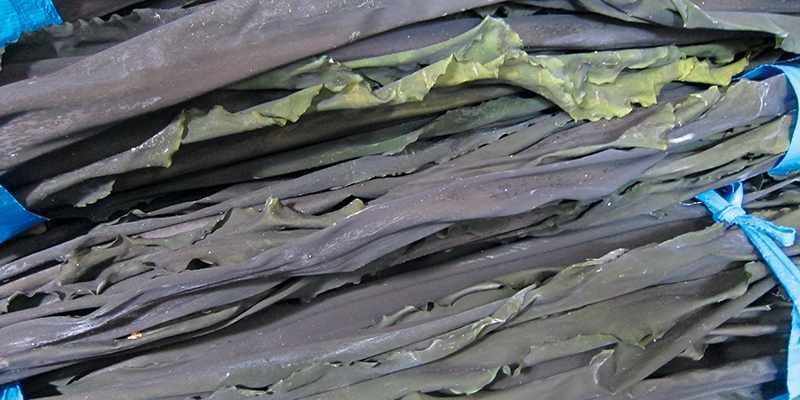
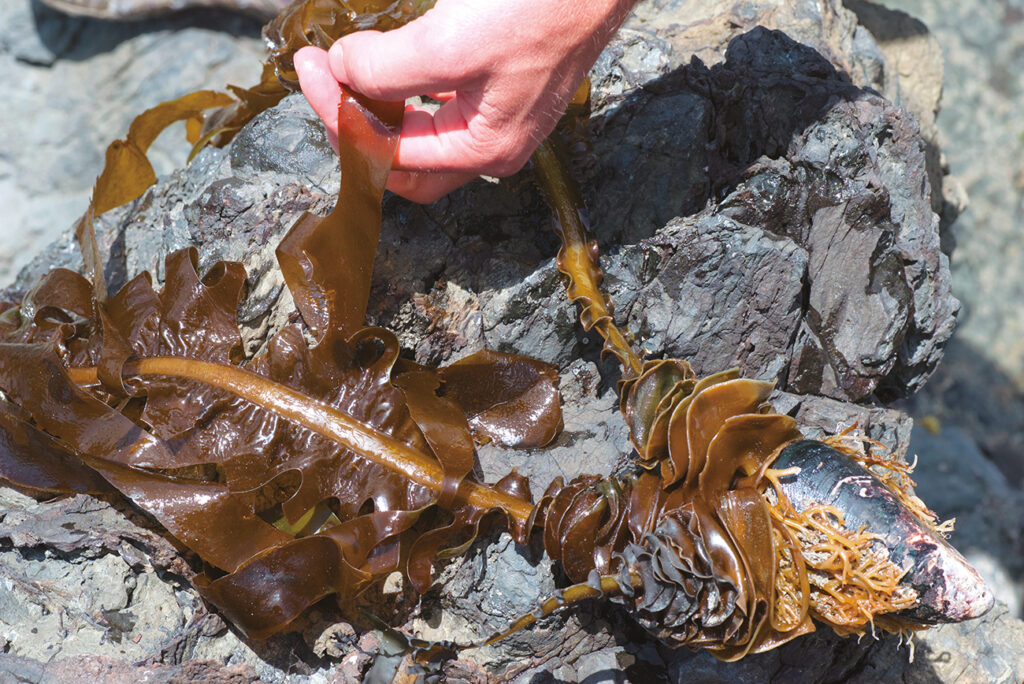
Worldwide, many dishes can be found that use seaweed as a food material; however, its use is limited, depending on the natural resources, climate, and culinary tradition. It is well known that the countries in East Asia, especially Japan, make many types of dishes using seaweed due to their excellent locations surrounded by the sea. For example, Saccharina japonica or “kombu,” Undaria pinnatifida or “wakame,” Sargassum fusiforme or “hijiki,” Pyropia yezoensis or “nori,” and Monostroma nitidum or “aonori” are typical popular types of seaweed used in home cooking all over the country of Japan. Additionally, there are many local types of seaweed, such as “Okinawa mozuku” and “funori”, which are also easily obtainable in today’s environment. Some of these seaweed dishes have been introduced with photos (Fig. 9). In these traditional dishes it’s easy to enjoy the umami taste provided by the free amino acids, the good flavor provided by volatile elements, and the characteristic texture of the fiber of the seaweed.
Most seaweed is dried using the sun or salt for long-term preservation. In addition, several kinds of seaweed are consumed as “tukudani”, a traditional Japanese preserved food stewed in soy sauce, or as a dried condiment for food. Such original cuisine has been developed using various processing techniques for food in local areas. Nowadays, the Japanese cuisine culture is a combination of this extensive knowledge and experience.
Conclusion
Seaweed, as a food material, is a rich source of nutrition and health promoting ingredients; for this reason, taking them as food or supplement material daily, is a good habit to easily maintain a healthy condition. Over the past decade or so, many seaweed supplements have become available on the market. In history the traditional use of this nutritious food material is often limited to those areas where it is locally abundant in the sea; however, its value is being gradually recognized worldwide. Seaweed can contribute to the prevention of obesity, and could change people’s dinner tables as well as their lifestyles.
* Tokyo University of Marine Science and Technology
Literature
M. Abidov, Z. Ramazanov, R. Seifulla, S. Grachev
The effects of Xanthigen in the weight management of obese premenopausal women with non-alcoholic fatty liver disease and normal liver fat.
Diabetes Obes. Matab., 12, 72-81 (2010).
H. Amano, M. Kakinuma, D. A. Coury, H. Ohno, T. Hara
Effect of a seaweed mixture on serum lipid level and platelet aggregation in rats.
Fisheries Science, 71, 1160–1166 (2005).
V. Balasubramaniam, S. Mustar, N. M. Khalid, A. A. Rashed, M. F. Noh, M. D. Wilcox, P. I. Chater, I. A. Brownlee, J. P. Pearson
Inhibitory activities of three Malaysian edible seaweeds on lipase and ↵-amylase.
J. Appl. Phycol. 25, 1405–1412 (2013).
N. Bitou, M. Ninomiya, T. Tsujita, H. Okuda
Screening of lipase inhibitors from marine algae.
Lipids, 34, 441–445 (1999).
P. I. Chater, M. Wilcox, P. Cherry, A. Herford, S. Mustar, H. Wheater, I. Brownlee, C. Seal, J. Pearson
Inhibitory activity of extracts of Hebridean brown seaweeds on lipase activity.
J. Appl. Phycol. 28, 1303–1313 (2016).
T. Esashi, M. Hanai
Bioavailability of magnesium contained in purple laver (Asakusa-Nori) by rats with scarce magnesium, being evaluated from serum magnesium, kidney calcification, and bone magnesium contents.
Journal of Nutritional Science and Vitaminology, 39, 381-387 (1993).
S. H. Eom, M. S. Lee, E. W. Lee, Y. M. Kim, T. H. Kim
Pancreatic lipase inhibitory activity of phlorotannins isolated from Eisenia bicyclis.
Phytother. Res. 27, 148–151 (2013).
P. Ganesan, K. Matsubara, T. Ohkubo, Y. Tanaka, K. Noda, T. Sugawara, T. Hirata
Anti-angiogenic effect of siphonaxanthin from green alga, Codium fragile.
Phytomedicine, 17, 1140-1144 (2010).
T. Inuzuka, K. Yamamoto, A. Iwasaki, O. Ohno, K. Suenaga, Y. Kawazoe, D. Uemura
An inhibitor of the adipogenic differentiation of 3T3-L1 cells, yoshinone A, and its analogs, isolated from the marine cyanobacterium Leptolyngbya sp.
Tetrahedron Lett. 55, 6711–6714 (2014).
H. A. Jung, H. J. Jung, H.Y. Jeong, H.J. Kwon, M.S. Kim, J.S. Choi
Anti-adipogenic activity of the edible brown algae Ecklonia stolonifera and its constituent fucosterol in 3T3-L1 adipocytes.
Arch. Pharm. Res. 37, 713–720 (2014).
S-K. Kim, Y-X. Li
Medicinal Benefits of Sulfated Polysaccharides from Sea Vegetables. In “Marine Medicinal Foods Vol. I: Implications and Applications, Macro and Microalgae” (ed. Se-Kwon Kim), Elsevier, 391-402, 2011.
ISBN: 978-0-12-387669-0
T. Koyama, M. Shirosaki, T. Satoh (2013).
Japanese published patent application: 2013-250309 (In Japanese).
T. Koyama
Marine Algae as Natural Resources of Functional Foods and Traditional Medicine in Japan.
Natural 1, 153, 68-79 (2016a).
T. Koyama, Y. Kawazoe, A. Iwasaki, O. Ohno, K. Suenaga, D. Uemura
Anti-obesity activities of the yoshinone A and the related marine -pyrone compounds.
The Journal of Antibiotics, 69(4), 348-351 (2016b).
Z-S. Li, K. Noda, E. Fujita, Y. Manabe, T. Hirata, T. Sugawara
The Green Algal Carotenoid Siphonaxanthin Inhibits Adipogenesis in 3T3-L1 Preadipocytes and the Accumulation of Lipids in White Adipose Tissue of KK-Ay Mice.
The Journal of Nutrition. First published ahead of print December 24, 2014.
H. Maeda, M. Hosokawa, T. Sashima, K. Funayama, K. Miyashita
Fucoxanthin from edible seaweed, Undaria pinnatifida, Shows antiobesity effect through UCP1 expression in white adipose tissues.
Biochem. Biophys. Res. Commun., 332, 392-397 (2005).
H. Maeda, M. Hosokawa, T. Sashima, K. Murakami-Funayama, K. Miyashita
Anti-obesity and anti-diabetic effects of fucoxanthin on diet-induced obesity conditions in a murine model.
Mol. Med. Rep. 2, 897-902 (2009).
Y. Matsuzawa
The metabolic syndrome and adipocytokines.
FEBS Lett. 580, 2917–2921 (2006).
L. Mišurcová, L. Machů, J. Orsavová
Seaweed Minerals as Nutraceuticals. In “Marine Medicinal Foods Vol. I: Implications and Applications, Macro and Microalgae” (ed. Se-Kwon Kim), Elsevier, 371-390, 2011.
ISBN: 978-0-12-387669-0
M. Miyata, T. Koyama, T. Kamitani, T. Toda, K. Yazawa
Anti-obesity effect on rodents of the traditional Japanese food, Tororo-kombu, shaved Laminaria.
Biosci. Biotech. Biochem. 73, 2326-2328 (2009).
M. Ng, et al. (Over 100 authors were listed)
Global, regional, and national prevalence of overweight and obesity in children and adults during 1980–2013: a systematic analysis for the Global Burden of Disease Study 2013.
Lancet 384, 766-781 (2014).
H. Noda, H. Amano, K. Arashima
Antitumour activity of polysaccharides and lipids from marine algae.
Nippon Suisan gakkaishi 55(7), 1265-1271 (1989).
OECD, “Obesity Update 2017”, (2017).
http://www.oecd.org/health/obesity-update.htm
F. B. Rebah, S. Smaoui, F. Frikha, Y. Gargouri, N. Miled
Inhibitory effects of Tunisian marine algal extracts on digestive lipases.
Appl. Biochem. Biotechnol. 151, 71–79 (2008).
S. A. Ritchie, J. M. C. Connell
The link between abdominal obesity, metabolic syndrome and cardiovascular disease.
Nutr. Metab. Cardiovasc. Dis., 17, 319-326 (2007).
R. J. Rodgers, H. T. Matthias, P. H. J. Wilding
Anti-obesity drugs: past, present and future.
Disease Models & Mechanisms 5, 621-626 (2012).
M. Shirosaki, T. Koyama
Laminaria japonica as a Food for the Prevention of Obesity and Diabetes. In “Marine Medicinal Foods Vol. I: Implications and Applications, Macro and Microalgae” (ed. Se-Kwon Kim), Elsevier, 200-212, 2011.
ISBN: 978-0-12-387669-0
Y. Song, G. H. Oh, M-B. Kim, J-K. Hwang
Fucosterol inhibits adipogenesis through the activation of AMPK and Wnt/β-catenin signaling pathways
Food Science and Biotechnology, 26, 489–494 (2017).
H. Suzuki
Serum vitamin B12 levels in young vegans who eat brown rice.
J. Nutr. Sci. Vitaminol., 41, 5877-594 (1995).
S. Takaichi
Carotenoids in algae: distributions, biosyntheses and functions.
Mar. Drugs, 9, 1101-1118 (2011).
S. Takenaka, S. Sugiyama, E. Ebara, K. Miyamoto, Y. Abe, F. Tamura, S. Watanabe, S.
Tsuyama, Y. Nakano
Feeding dried purple laver (nori) to vitamin B12-deficient rats significantly improves vitamin B12 status.
British Journal of Nutrition, 85(6), 699-703 (2001).
World Health Organization (WHO) regional office for Europe (2017).
http://www.euro.who.int/en/health-topics/noncommunicable-diseases/obesity/data-and-statistics
Natural 1