

* Paola Angelini,
* Bernard Fioretti,
* Giancarlo Bistocchi,
* Andrea Arcangeli,
* Roberto Venanzoni
Utilizzati in diversi sistemi di medicina tradizionale come anche in rituali sciamanici o religiosi di numerose popolazioni dei cinque continenti, i funghi rappresentano da sempre una risorsa alimentare e attualmente anche una fonte interessante di molecole biologicamente attive a uso farmaceutico, oltre ad avere un ruolo preminente nel conservare l’equilibrio delicato di un ecosistema. Conoscere e censire le specie presenti in un determinato territorio è il primo passo per conservarne la biodiversità.
Il termine biodiversità, o diversità biologica, ha assunto negli ultimi anni un’importanza sempre crescente, testimoniato anche dal riconoscimento politico internazionale attribuitogli dalla “Convenzione sulla Biodiversità” (Rio de Janeiro 1992), cui hanno aderito numerosi stati.
Ormai nessuno dubita più che la biodiversità sia di centrale importanza per il corretto funzionamento degli ecosistemi e, di conseguenza, per la vita sulla terra. La stessa qualità della vita degli uomini è in stretta connessione con la biodiversità: da essa e dalle sue componenti derivano cibo, farmaci, mangimi e prodotti industriali.
La vita stessa dell’uomo dipende, quindi, dalla biodiversità, ma la diffusione di una coscienza ecologica è, purtroppo, limitata. Oggi l’uomo gioca un ruolo importante nelle trasformazioni del nostro pianeta: le azioni antropiche provocano mutamenti imponenti.
Tutte le diverse componenti di un ecosistema giocano un ruolo decisivo nel mantenere il delicato equilibrio ecologico e tra queste anche i funghi risultano indispensabili.
I funghi sono tipici organismi eucarioti, eterotrofi, capaci di condurre una vita come saprofiti, parassiti o simbionti (Pagiotti et al. 2011; Picco et al. 2011; Angelini et al. 2012b; Perotto et al. 2013). Essi svolgono un ruolo importante in numerosi processi microbiologici ed ecologici, che influenzano la fertilità del suolo, la decomposizione della materia organica e il riciclo degli elementi minerali (Angelini et al. 2006; Angelini et al. 2008).
Dal punto di vista nutrizionale e salutistico i funghi, sin dall’antichità, rappresentano una preziosa fonte di cibo e di molecole d’interesse farmaceutico (Gargano et al. 2017). Tradizionalmente, queste ultime includono composti bioattivi, generalmente metaboliti secondari, sintetizzati in specifici gruppi di funghi, sfruttando l’immensa diversità chimica delle molecole fungine (Bills & Gloer, 2016).
Attualmente si conoscono circa 82.000 specie di funghi, ma si stima che ve ne siano almeno 1,5 milioni (Kirk et al. 2008,Blackwell 2011). Circa 270 specie sono conosciute per le loro proprietà terapeutiche o come agenti preventivi che possono migliorare il benessere fisico e psichico dell’uomo, ma molte non sono ancora state studiate, o addirittura sono del tutto sconosciute all’uomo (Vikineswary et al. 2013).
La consapevolezza del valore della biodiversità dei funghi e dei prodotti da essi derivati sta aumentando rapidamente e, proprio per ottimizzarne l’utilizzo, diventa sempre più importante approfondirne lo studio, la conoscenza e la conservazione.
La prima check list dei macrofunghi in Umbria
Il primo passo da compiere ai fini della conservazione dei funghi è quello compilare una checklist (liste di specie) che permetta di conoscere la presenza o l’assenza e la distribuzione sul territorio delle varie specie. Sono quindi necessarie indagini micologiche pluriennali che possono mettere in evidenza le specie rare, limitate esclusivamente ad alcuni ambienti, che necessitano di piani gestionali atti alla conservazione e alla salvaguardia.
Di recente in Umbria è stata pubblicata la prima checklist dei macrofunghi (Angelini et al. 2017), ossia dei funghi visibili a occhio nudo di dimensione superiore a un millimetro, epigei e ipogei. Essa è stata compilata sulla base di segnalazioni di funghi umbri presenti nelle prime pubblicazioni scientifiche risalenti alla fine del XX sec., recenti ricerche realizzate in siti Natura 2000 di importanza comunitaria (SCI) (Angelini et al. 2012a, 2015, 2016), inediti elenchi e osservazioni personali. Sono state censite 1016 specie di cui 910 appartenenti al Phylum Basidiomycota e 106 al Phylum Ascomycota. A livello di classe, gli Agaricomycetes comprendevano il maggior numero di specie (898), seguita da Dacrymycetes (5), Tremellomycetes (4), Puccinomycetes (2) e Ustilaginomycetes (1).
Le famiglie con il maggior numero di specie erano le Russulaceae (146), Tricholomataceae (90), Agaricaceae (81), Cortinariaceae (63), Boletaceae (52), Amanitaceae e Hygrophoraceae (35).
Il genere Russula era il più ricco in diversità con 106 specie, seguito da Cortinarius (52), Tricholoma (37), Lactarius (37), Amanita (32), Mycena (29) e Agaricus (25).
Gli Ascomycota erano rappresentati da 106 specie, distribuite tra 57 generi e 23 famiglie. La classe Pezizomycetescomprendeva il maggior numero di specie (72) seguita da Sordariomycetes (15), Leotiomycetes (14), Dothideomycetes(2), Orbilomycetes (2) e Eurotiomycetes (1).
Le famiglie con il maggior numero di generi erano le Pyronemataceae (23), Tuberaceae (15), Helvellaceae (12),Pezizaceae (10) e Morchellaceae (9). Il genere Tuber era quello con il maggior numero di specie (13), seguito da Peziza(9) e Helvella (9).
Dalla checklist possono inoltre essere estratti gli elenchi di 972 funghi considerati “rari/o raramente segnalati”, 103 “occasionali/o infrequentemente segnalati”, 37 “frequenti” e 6 “comuni”.
Tali dati risultano essere un utile strumento per la compilazione di red list le quali sono alla base di qualsiasi progetto di gestione e conservazione del patrimonio ambientale.
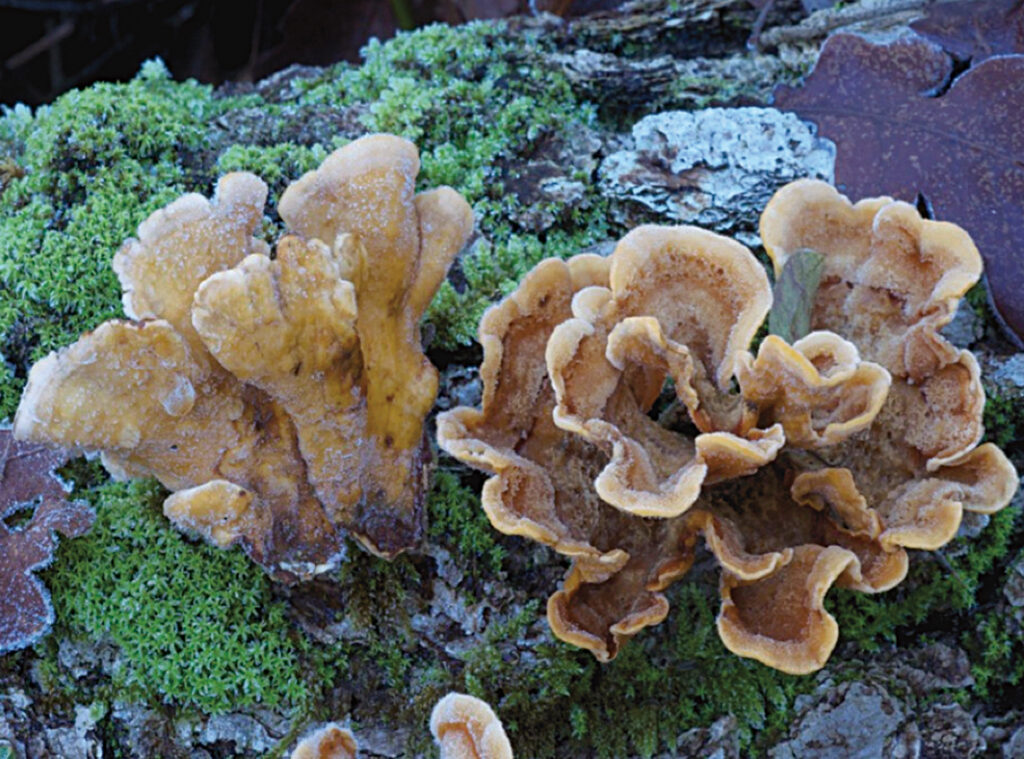
Funghi medicinali presenti nella checklist dell’Umbria
I più importanti funghi medicinali presenti nella cheklist, autorizzati come integratori alimentari secondo le disposizioni del Ministero della Salute Italiano (http://www.salute.gov.it/imgs/C_17_pagineAree_3668_listaFile_itemName_0_file.pdf) sono i seguenti:
Auricularia auricula-judae (Bull.) Quél., Coprinus comatus (O.F. Müll.) Pers., Trametes versicolor (L.) Lloyd, Ganoderma lucidum (Curtis) P. Karst. (Reishi), Hericium erinaceus (Bull.) Pers., Grifola frondosa (Dicks.) Gray (Maitake), Lentinula edodes (Berk.) Pegler (Shiitake), Pleurotus ostreatus (Jacq.) P. Kumm., Polyporus umbellatus (Pers.) Fr.
La vasta letteratura sui funghi medicinali (1045 articoli in PubMed) include anche articoli riguardanti le specie elencate in Tab. 1.
Nel Dipartimento di Chimica, Biologia e Biotecnologia dell’Università di Perugia è in corso un progetto di ricerca che ha per oggetto lo studio di alcuni macrofunghi presenti sul nostro territorio, conosciuti in etnobotanica come medicinali, con l’obiettivo di valutarne le effettive proprietà biologiche. Il progetto prevede un gruppo di ricerca allargato a vari ambiti disciplinari. Sono infatti coinvolti esperti micologi, botanici, biologi, chimici e fisiologi della nutrizione.
* UNIVERSITÀ DI PERUGIA
Dipartimento di Chimica, Biologia e Biotecnologie
Bibliografia
Aina D.A., Jonathan S.G., Olawuyi O.J., Ojelabi D.O., Durowoju B.M. 2012. Antioxidant, antimicrobial and phytochemical properties of alcoholic extracts of Cantharellus cibarius – a Nigerian mushroom. N. Y. Sci. J. 5(10): 114-120.
Ahmad N., Bansal A.K., Kidwai J.R. 1984. Effect of PHA–B fraction of Agaricus bisporus lectin on insulin release and 45Ca2+ uptake by islet of Langerhans in vitro. Acta Diabetol. 21: 63–70.
Altuner E.M., Akata I., Canli K. 2012. In vitro antimicrobial screening of Bovista nigrescens Pers. J. Forest. 12(1): 90-96.
Angelini P., Arcangeli A., Bistocchi G., Rubini A., Venanzoni R., Perini C. 2017. Current knowledge of Umbrian macrofungi (central Italy), Plant Biosyst. 151:(5): 915-923.
Angelini P., Bistocchi G., Arcangeli A., Venanzoni R. 2012a. Preliminary check-list of the macromycetes from Collestrada forest ecosystems in Perugia (Italy). Mycotaxon 120: 505–506.
Angelini P., Bistocchi G., Arcangeli A., Bricchi E., Venanzoni R. 2015. Diversity and ecological distribution of macrofungi in a Site of Community Importance of Umbria (Central Italy). TOECOLJ 8: 1-8.
Angelini P., Bistocchi G., Arcangeli A., Rubini A., Venanzoni R. 2016. Inventory, diversity and communities of macrofungi in the Collestrada forest (Umbria, central Italy). Plant Biosyst., 150: 1096–1105.
Angelini P., Granetti B., Pagiotti R. 2008. Effect of antimicrobial activity of Melaleuca alternifolia essential oil on antagonistic potential of Pleurotus species against Trichoderma harzianum in dual culture. World. J. Microb. Biotech. 24: 197-202.
Angelini P., Pagiotti R., Menghini A., Vianello B. 2006. Antimicrobial activities of various essential oils against foodborne pathogenic or spoilage moulds. Ann. Microbiol. 56: 65-69.
Angelini P., Rubini A., Gigante D., Reale L., Pagiotti R., Venanzoni R. 2012b. The endophytic fungal communities associated with the leaves and roots of the common reed (Phragmites australis) in Lake Trasimeno (Perugia, Italy) in declining and healthy stands. Fungal Ecol 5: 683–693.
Angelini P., Tirillini B., Venanzoni R. 2012c. In vitro antifungal activity of Calocybe gambosa extracts against yeasts and filamentous fungi. Afr. J. Microbiol. Res. 6(8): 1810-1814.
Ajith T.A., Janardhanan K.K. 2007. Indian medicinal mushrooms as a source of antioxidant and antitumor agents. J. Clin. Biochem. Nutr. 40: 157-162.
Bandara A.R., Rapiord S., Bhat D.J., Kakumyana P., Chamyuang S., Jianchu X.U., Kevin D.H. 2015. Polyporus umbellatus, an edible-medicinal cultivated mushroom with multiple developed health-care products as food, medicine and cosmetics: a review. Cryptogamie Mycologie36(1): 3-42.
Bills G., Gloer J. 2016. Biologically active secondary metabolites from the fungi. Microbiol. Spectrum 4(6): FUNK-0009-2016.
Blackwell M. 2011. The fungi: 1, 2, 3… 5.1 million species? Am. J. Bot. 98(3): 426–438.
Bobek P., Galbavý S. 1999. Hypocholesterolemic and antiatherogenic effect of oyster mushroom (Pleurotus ostreatus) in rabbits. Nahrung. 43(5): 339-342.
Boh B., Berovic M. 2007. Grifola frondosa (Dicks.: Fr.) S. F. Gray (Maitake Mushroom): medicinal properties, active compounds, and biotechnological cultivation. Int. J. Med. Mushrooms 9: 89-108.
Brachvogel R. 1986. Reduction of blood sugar by Calocybe gambosa Fr. Donk. Zeitsch. Mykol., 52: 445.
Chang ST, Mao XL. 1995. Hong Kong Mushroom, The Chinese University Press, Hong Kong, pp. 109-110.
Chang S.T., Miles P.G. 2004. Mushrooms cultivation, nutritional value, medicinal effect and environmental impact. 2nd Edn., CRC Press, Boca Raton, pp. 450.
Chen Y.J., Chen C.C., Huang H.L. 2016. Induction of apoptosis by Armillaria mellea constituent armillarikin in human hepatocellular carcinoma. Onco Targets Ther. 9: 4773-4783.
Coles M., Toth B. 2005. Lack of prevention of large intestinal cancer by VPS, an extract of Coriolus versicolor mushroom. In Vivo 19: 867–871.
Dai Y.C., Zhou L.W., Cui B.K., Chen Y.Q., Decock C. 2010. Current advances in Phellinus sensu lato: medicinal species, functions, metabolites and mechanisms. Appl. Microbiol. Biotechnol. 87(5): 1587-1593.
De Silva D.D., Rapior S., Kevin D.H., Bahkali A.H. 2012. Medicinal mushrooms in prevention and control of diabetes mellitus. Fungal Diversity 56: 1-29.
Doskocil I., Havlik J., Verlotta R., Tauchen J., Vesela L., Macakova K., Opletal L., Kokoska L., Rada V. 2016. In vitro immunomodulatory activity, cytotoxicity and chemistry of some central European polypores. Pharm. Biol. 54(11): 2369-2376.
Ewart R.B.L., Kornfeld S., Kipnis D.M. 1975. Effect of lectins on hormone release from isolated rat islets of Langerhans. Diabetes 24: 705-714.
Gargano M.L., van Griensven L.J.L.D., Isikhuemhen O.S., Lindequist U., Venturella G., Wasser S.P., Zervakis G.I. 2017. Medicinal mushrooms: valuable biological resources of high exploitation potential. Plant Biosyst. 151(3): 548-565.
Gray A.M., Flatt P.R. 1998. Insulin-releasing and insulin-like activity of Agaricus campestris (mushroom). J. Endocrinol. 157: 259-266.
Guillamon E., Lafuente A.G., Lozano M. 2010. Edible mushrooms: roles in the prevention of cardiovascular diseases. Fitoterapia 81(7): 715-723.
He X., Wang X., Fang J., Chang Y., Ning N., Guo H., Huang L., Huang X., Zhao Z. Structures, biological activities, and industrial applications of the polysaccharides from Hericium erinaceus (Lion’s Mane) mushroom: A review. Int. J. Biol. Macromol. 97:228-237.
Hobbs C.R. 2000. Medicinal Value of Lentinus edodes (Berk.) Sing. (Agaricomycetideae). A Literature Review. Int. J. Med. Mushrooms 2: 287-302.
Hou Y., Ding X., Hou W., Song B., Yan X. 2017. Structure elucidation and antitumor activity of a new polysaccharide from Maerkang Tricholoma matsutake. Int. J. Biol. Sci., 13(7): 935-948.
Hou Y., Ding X., Hou W., Zhong J., Zhu H., Ma B., Xu T., Li J. 2013. Anti-microorganism, anti-tumor, and immune activities of a novel polysaccharide isolated from Tricholoma matsutake. Pharmacogn. Mag. 9(35): 244-249.
Jagadish L.K., Krishnan V.V., Shenbhagaraman R., Kaviyarasan V. 2009. Comparative study on the antioxidant, anticancer and antimicrobial property of Agaricus bisporus (J. E. Lange) Imbach before and after boiling. Afr. J. Biotechnol. 8: 654-661.
Jedinak A., Dughgaonkar S., Jian J., Sandusky G., Silva D. 2010. Pleurotus ostreatus inhibits colitis- related colon carcinogenesis in mice. Int. J. Med. Mushrooms 26: 643-650.
Jiang P.P., Han Y., Gu S.H. 2009. Detemination of amino acid in five edible fungi and heir nutrition evaluation. Amino Acids Biotic Resource31(2): 67-71.
Kabita D., Albinus L., Dibyendu P., Kumar L.J. 2014. Ethnomycological knowledge on wild edible mushroom of Khasi tribes of Meghalaya, North-Eastern India. European Academic Research 2(3): 3433-3443.
Kasuga A., Aoyagi Y., Sugahara T. 1995. Antioxidant activity of fungus Suillus bovines. Journal of Food Science 60:1113-1115.
Keller C., Maillard M., Keller J., Hostettmann K. 2002. Screening of European fungi for antibacterial, antifungal, larvicidal, molluscicidal, antioxidant and free-radical scavenging activities and subsequent isolation of bioactive compounds. Pharm. Biol., 40(7): 518-525.
Khan M.A., Tania M., Liu R., Mohammad Mijanur Rahman M.M. 2013. Hericium erinaceus: an edible mushroom with medicinal values. J. Complement. Integr. Med. 10(1): 1-6.
Khatua S., Paul S., Acharya K. 2012. Mushroom as the potential source of new generation of antioxidant: a review. Research J. Pharm. and Tech. 6(5): 496-505.
Kimura T. 2013. Natural products and biological activity of the pharmacologically active cauliflower mushroom Sparassis crispa. BioMed Research International Article ID 982317.
Kirk P.M., Cannon P.F., Minter D.W., Stalpers J.A. 2008. Dictionary of the Fungi, 10th ed. CABI, Wallingford, UK.
Kolundžić M., Grozdanić N.D., Dodevska M., Milenković M., Sisto F., Miani A., Kundaković T. 2016. Antibacterial and cytotoxic activities of wild mushroom Fomes fomentarius (L.) Fr., Polyporaceae. Ind. Crops Prod., 79: 110-115.
Komoda Y, Shimizu M, Sonoda Y, Sato Y. 1989. Ganoderic acid and its derivatives as cholesterol synthesis inhibitors. Chem. Pharm. Bull. 37: 531-533.
Kuznetsov O.I.U., Mil’kova E.V., Sosnina A.E., Sotnikova N.I.U. 2005. Antimicrobial action of Lentinus edodes juice on human microflora Zh. Mikrobiol. Epidemiol. Immunobiol. 1:80-82.
Lin Z.B., Zhang H.N. 2004. Antitumor and immunoregulatory activities of Ganoderma lucidum and its possible mechanisms. Acta Pharmacol. Sin. 25: 1387-1395.
Lindequist U., Niedermeyer T.H.J., Julich W.D. 2005. The pharmacological potential of mushrooms –Review. J. Evid. Based Complementary Altern. Med. 2 (3): 285-299.
Lull C., Wichers H.J., Savelkoul H.F.J. 2005. Antiinflammatory and immunomodulating properties of fungal metabolites. Mediators Inflamm. 2005: 63–80.
Méndez-Espinoza C., García-Nieto E., Montoya Esquivel A., Montiel González M., Efraín Velasco-Bautista E., Calderón-Ezquerro C., Juárez-Santacruz L. 2013. Antigenotoxic potential of aqueous extracts from the chanterelle mushroom, Cantharellus cibarius (Higher Basidiomycetes), on human mononuclear cell cultures. Int. J. Med. Mushrooms 15(3): 325-332.
Minamino K., Nagasawa Y,, Ohtsuru M. 2008. A water-soluble extract from Grifola frondosa, maitake mushroom, decreases lipid droplets in brown adipocyte tissue cells. J. Nutr. Sci. Vitaminol (Tokyo) 54(6): 497-500.
Mitchell T.G., Perfect J.R. 1995. Cryptococcosis in the era of AIDS–100 years after the discovery of Cryptococcus neoformans. J. Clin. Microbiol. Rev. 8: 515-548.
Mohamed S.H., Dix N.J. 1988. Resource utilization and distribution of Coprinus comatus, C. atramentarius, Lacrimaria velutina and Melanoleuca grammopodia. T. Brit. Mycol. Soc. 90(2): 255-263.
Moradali M.F., Mostafavi H., Ghods S., Hedjaroude G.A. 2007. Immunomodulating and anticancer agents in the realm of macromycetes fungi (macrofungi). Int. Immunopharmacol. 7: 701-724.
Muszyńska B., Sułkowska-Ziaja K., Ekiert H. 2011. Chemical, pharmacological, and biological
characterization of the culinary-medicinal honey mushroom, Armillaria mellea (Vahl) P. Kumm. (Agaricomycetideae): A Review. Int. J. Med. Mushrooms. 13(2): 167-175.
Muszyńska B., Kała K., Rojowski J., Grzywacz A., Opoka W. 2017. Composition and Biological properties of Agaricus bisporus fruiting bodies – a review. Pol. J. Food Nutr. Sci. 67(3): 173-181.
Nowacka N., Nowak R., Drozd M., Olech M., Los R., Malm A. 2015. Antibacterial, antiradical potential and phenolic compounds of thirty-one polish mushrooms. PLoS ONE 10(10): e0140355.
Ooi V.E., Liu F. 2000. Immunomodulation and anti-cancer activity of polysaccharide-protein complexes. Curr. Med. Chem. 7(7): 715-729.
Pagiotti R., Angelini P., Rubini A., Tirillini B., Granetti B., Venanzoni R. 2011. Identification and characterisation of human pathogenic filamentous fungi and susceptibility to Thymus schimperi essential oil. Mycoses 54: e364–e376.
Patel Y., Naraian R., Singh V.K. 2012. Medicinal Properties of Pleurotus Species (Oyster Mushroom): A Review. World J. Fungal & Plant Biol. 3(1): 01-12
Perotto S., Angelini P., Bianciotto V., Bonfante P., Girlanda M., Kull T., et al. 2013. Interaction of fungi with other organisms. Plant Biosyst. 147: 208-218.
Phan C.W., David P., Naidu M., Wong K.H., Sabaratnam V. 2015. Therapeutic potential of culinary-medicinal mushrooms for the management of neurodegenerative diseases: diversity, metabolite, and mechanism. Crit. Rev. Biotechnol. 35(3): 355-68.
Picco A.M., Angelini P., Ciccarone C., Franceschini A., Ragazzi A., Rodolfi M., et al. 2011. Biodiversity of emerging pathogenic and invasive fungi in plants, animals and humans in Italy. Plant Biosyst 145: 988–996.
Qi Q.Y., Ren J.W., Sun L.W., He L.W., Bao L., Yue W., Sun Q.M., Yao Y.J., Yin W.B., Liu H.W. 2015. Stucturally diverse sesquiterpenes produced by a Chinese Tibet fungus Stereum hirsutum and their cytotoxic and immunosuppressant activities. Org. Lett. 17(12): 3098-3101.
Qu L., Li S., Zhuo Y., Chen J., Qin X., Guo G., 2017. Anticancer effect of triterpenes from Ganoderma lucidum in human prostate cancer cells. Oncology Letters 14: 7467-7472.
Radzki W., Ziaja-Sołtys M., Nowak J., Rzymowska J., Topolska J., Sławińska A., Michalak-Majewska M., Zalewska-Korona M., Kuczumow A. 2016. Effect of processing on the content and biological activity of polysaccharides from Pleurotus ostreatus mushroom. LWT Food Sci. Technol. 66: 27-33.
Sun S. 2014. One kind of traditional Chinese medicine composition for treating diabetes. China patent application CN103550660A.
Sun S. 2014. One kind of traditional Chinese medicine composition for treating diabetes. China patent application CN103550660A.
Sun Y, Zhou X. 2014. Purification, initial characterization and immune activities of polysaccharides from the fungus, Polyporus umbellatus. Food Science and Human Wellness 3: 73-78.
Turkoglu A., Duru M.E., Mercan N. 2007. Antioxidant and antimicrobial activity of Russula delica Fr: an edidle wild mushroom. Eurasian J. Anal. Chem. 2(1): 54-67.
Vikineswary S., Wong K.H., Murali N., Pamela R.D. 2013. Neuronal health – Can culinary and medicinal mushrooms help? J. Tradit. Complement. Med. 3(1): 62-68.
Wakefield E.M. 1964. The Observer’s Book of Common Fungi (Observer’s Pocket Series No. 19) (3rd printing ed.). Frederic Warne & Co Ltd. OCLC 748994120.
Wang G., Zhao J., Liu J., Huang Y., Zhong J.J., Tang W. 2007. Enhancement of IL–2 and IFN–gamma expression and NK cells activity involved in the anti–tumor effect of ganoderic acid Me in vivo. Int. Immunopharmacol. 7: 864-870.
Wasser SP. 2002. Medicinal mushrooms as a source of antitumour and immunomodulating polysaccharides. Appl. Microbiol. Biotechnol. 60: 258-274.
Wasser SP. 2005. Shiitake (Lentinus edodes). Encyclopedia of Dietary Supplements, Marcel Dekker, New York (USA), pp. 653-664.
Wolff E.R.S., Wisbeck E., Silveira M.L.L., Gern R.M.M., Pinho M.S.L., Furlan S.A. 2008. Antimicrobial and antineoplasic activity of Pleurotus ostreatus. Appl. Biochem. Biotechnol. 151(2-3): 402-412.
Wong K.H., Naidu M., David R.P., Bkar R., Sabaratnam V. 2012. Neuroregenerative potential of lion’s mane mushroom, Hericium erinaceus(Bull.: Fr.) Pers. (higher Basidiomycetes), in the treatment of peripheral nerve injury (review). Int J Med Mushrooms 14(5): 427-446.
Wu M., Luo X., Xu X., Wei W., Yu M., Jiang N., Ye L., Yang Z., Fei X. 2014. Antioxidant and immunomodulatory activities of a polysaccharide from Flammulina velutipes. J. Tradit. Chin. Med. 34(6): 733-740.
Yamac M., Zeytinoglu M., Kanbak G., Bayramoglu G., Senturk H. 2009. Hypoglycemic effect of crude exopolysaccharides produced by Cerrena unicolor, Coprinus comatus, and Lenzites betulina isolates in streptozotocin-induced diabetic rats, Pharmaceutical Biology, 47(2): 168-174.
Yang J.H., Lin H.C., Mau J.L. 2002. Antioxidant properties of several commercial mushrooms. Food Chemistry 77: 229-235.
Yeh M.Y., Ko W.C., Lin L.Y. 2014. Hypolipidemic and Antioxidant Activity of Enoki Mushrooms (Flammulina velutipes). BioMed Res. Int. 2014:352385.
Yamada J., Hamuro J., Hatanaka H., Hamabata K., Kinoshita S. 2007. Alleviation of seasonal allergic symptoms with superfine beta-1,3-glucan: a randomized study. J. Allergy Clin. Immunol. 119(5): 1119-1126.
Yuan Z., He P., Cui J., Takeuchi H. 1998. Hypoglycemic effect of water-soluble polysaccharide from Auricularia auricula–judae Quel. on genetically diabetic KK-Ay mice. Biosci. Biotechnol. Biochem. 62: 1898-1903.
Zhao Y.Y. 2013. Traditional uses, phytochemistry, pharmacology, pharmacokinetics and quality control of Polyporus umbellatus (Pers.) Fries: A review. Journal of Ethnopharmacology 149(1): 35-48.
Natural 1